The campaign idea is ready. The article is ready. The little calculator that would make both more useful is somewhere in a development queue.
For a small marketing team, that gap can be maddening. You don't want to start a software company. You want the people who understand the campaign and the people who build the tool to work from the same brief.
AI-assisted development creates a reason to revisit that handoff. It does not make the handoff disappear.
Bring the capability in-house, not just the software
“In-house development” doesn't have to mean hiring a large department before you can try a small idea. It does mean having accountable people close enough to the work to understand it, review it and keep it useful.

AI-generated editorial illustration—not product hardware or a screenshot.
A marketer can own the business question. An internal developer or designated technical reviewer can own implementation judgment. An editor can check the explanation the visitor sees. A person responsible for operations can decide whether the tool is ready to run.
One person may cover more than one role. The responsibilities still need to exist.
An AI assistant can help those people draft and inspect a solution. It cannot silently become all of them.
Start with the part visitors misunderstand
Imagine a fictional team planning a campaign-budget explainer. The article describes the choices; the tool lets a reader explore an example. The initial brief should say which question the tool answers, which assumptions it uses and what it must not imply.

AI-generated editorial illustration—not product hardware or a screenshot.
Does an example show arithmetic, or does it recommend a spending decision? Are the figures fictional? What happens when someone leaves a field blank? Agree those details before arguing about the button colour.
That shared brief gives marketing and development something more useful than “make it feel intuitive.”
Use the build process to keep the conversation open
The documented Noodle Build workflow includes proposed changes, project files and a preview. Those can give a team concrete things to review together: the current wording, the logic behind a result and the effect of a requested change.
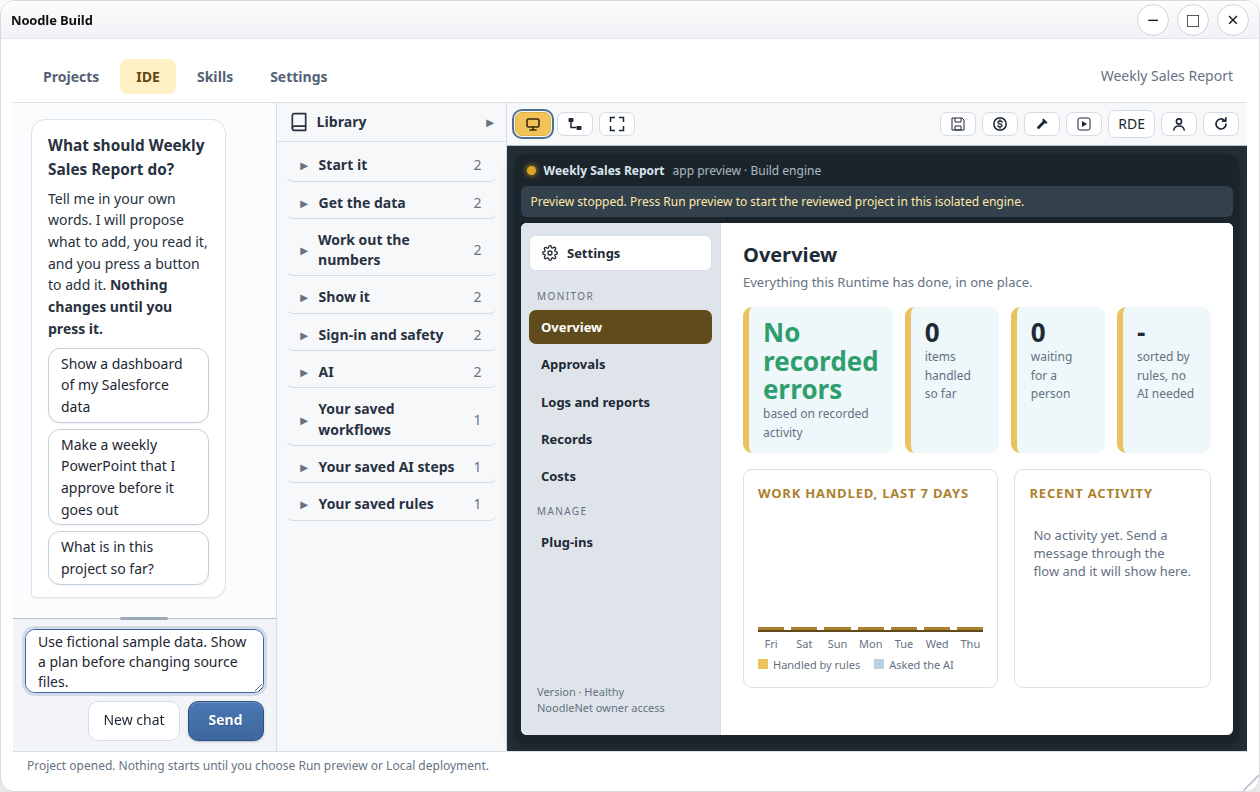
Current Build example workspace. The request is unsent; this is not a generated customer result. Controlled test session; fictional examples.
A preview is a place to investigate the work, not proof that it is ready for visitors. AI can produce persuasive explanations and incorrect logic at the same time. An internal technical review still matters, especially when the team is learning a new way of building.
Noodle Build is now the official development workspace, with the old separate editor launchers retired. Projects, the Dev Agent and IDE, optional Flow view and Preview bring the development work into one workspace. That does not establish an automatic launch path or completed remote delivery.
Plan the second change
The first version attracts attention. The second change reveals whether the team has built a working capability.
Who updates the tool when the offer changes? Who checks that an edited explanation still matches the calculation? Where is the source? Who can stop the tool if a result is misleading?
Answering those questions is part of bringing development closer to marketing. Otherwise the team has moved the backlog into a new application without improving the relationship around it.
The aim is a shorter, clearer conversation between people who share responsibility for the result—not a promise that AI removes the need for skill.
The same need for a reviewable handoff applies to content. StoryShellOS explains its editorial-to-publishing workflow; development and publishing still need their own checks.
Want development closer to your marketing team, but not comfortable trusting a black box? Let's grab a coffee and talk through the skills, checks and handoffs a first project would need.